A heat pump is one machine doing two jobs, and Phoenix splits those jobs unevenly. The cooling side runs from roughly the second of May, the average date of the first 100 degree day, through October, across the 111 or so days a year the city spends at or above 100 degrees. The heating side gets asked for a few weeks. That imbalance is the whole story of how these systems fail here.
Cooling side components wear out on schedule. Capacitors, contactors, fan motors, and compressors accumulate run hours faster than the same parts would anywhere with a real spring. Heating side components fail differently. A reversing valve, a defrost board, or a bank of auxiliary heat strips can sit untouched for months, and the failure is not discovered on the day it happens. It is discovered on the first cold morning, which is exactly when everybody else discovers theirs.
Monsoon season, June 15 through September 30 on the National Weather Service calendar, adds the dust load. A packed outdoor coil raises pressure on the cooling side and cuts capacity on the heating side later, because it is the same coil doing both.
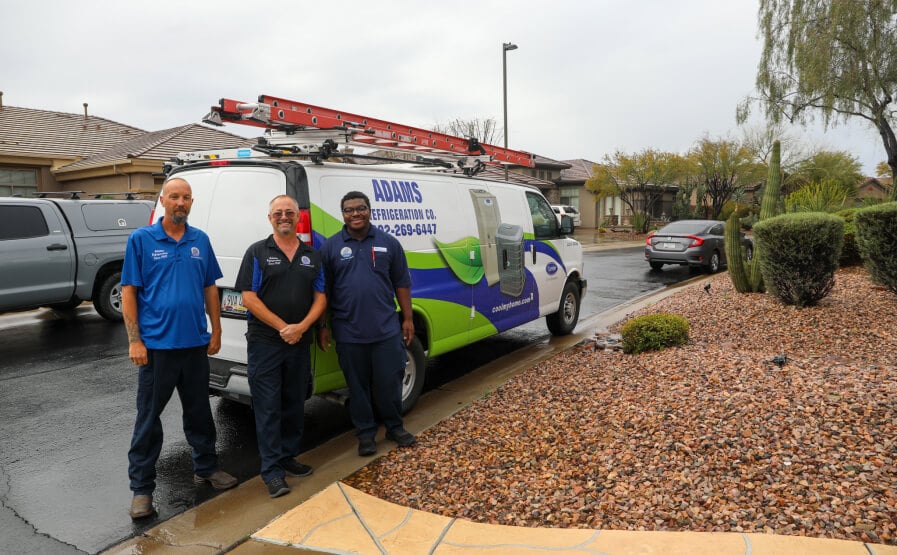
Plenty of Phoenix housing carries the equipment on a flat roof rather than a pad, which turns the visit into a roof access job and means nobody in the household has looked at the unit in years. Adams works out of one shop on North 35th Avenue, with the parts counter in the same building as the trucks.